Photos by Michael Drummond
Wherever and however you ride your bike, a good set of bike lights is essential, and from cheap city run arounds to the types that light up the entire forest, there’s no shortage of great lights available on the market. But the search for the perfect set of lights is far from straight forward. So how good are Knog’s Blinder 1300 and R-150?
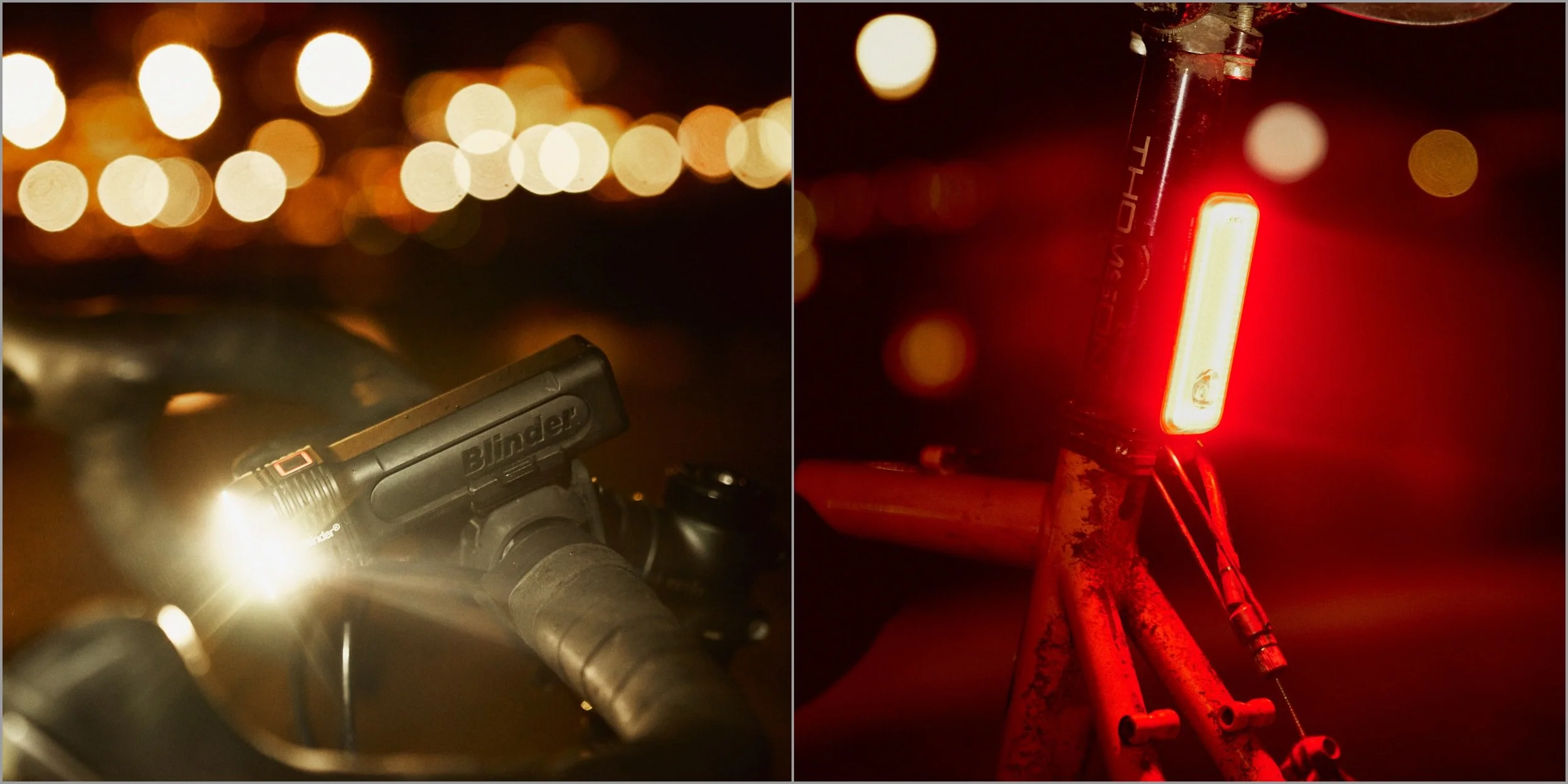
Why I Chose the Knog Blinder Set
In our house, bikes outnumber people three-to-one, and so surviving the UK dark winters makes a reliable light rotation essential. While I’ve long relied on Lezyne’s powerful, mid-sized, versatile units, my entry into the 2025 Transcontinental Race sparked a search for a versatile backup set to pair with my Macro 1400+.
Alongside Lezyne’s catalogue of lights, those from Knog seem to run pretty parallel. A good size to power ratio, reasonable battery life, plenty of mounting options and USB charging. Yes there are certainly bigger, more powerful units with longer battery life, but they often come with proprietary charging cables and a bigger unit becomes less versatile with bikpeacking bags. Not to mention the cost.
With the longest ultra races like the TCR, even with the best kit, it’s a good idea to bring backups, so when Knog offered me the chance to try out theBlinder 1300 and R-150, it was the perfect opportunity to put them to the test on one of the longest most challenging testing fields available.
Out the Box
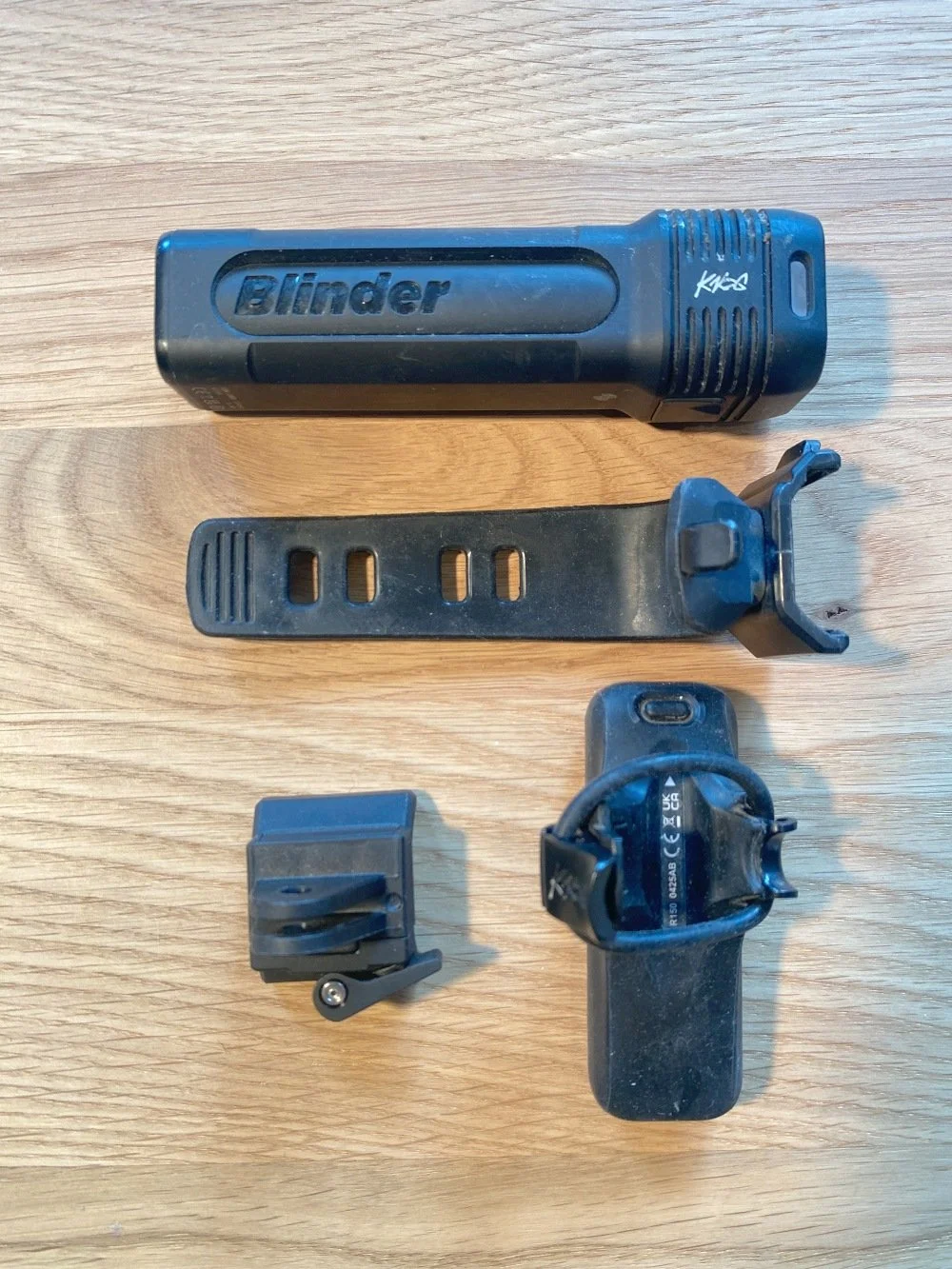
Both front and rear light units feel exceptionally well-built. The Blinder 1300 isn't featherweight, but for a 1300-lumen light, that weight feels reassuring rather than excessive. The CNC-machined aluminium body is premium and sturdy.
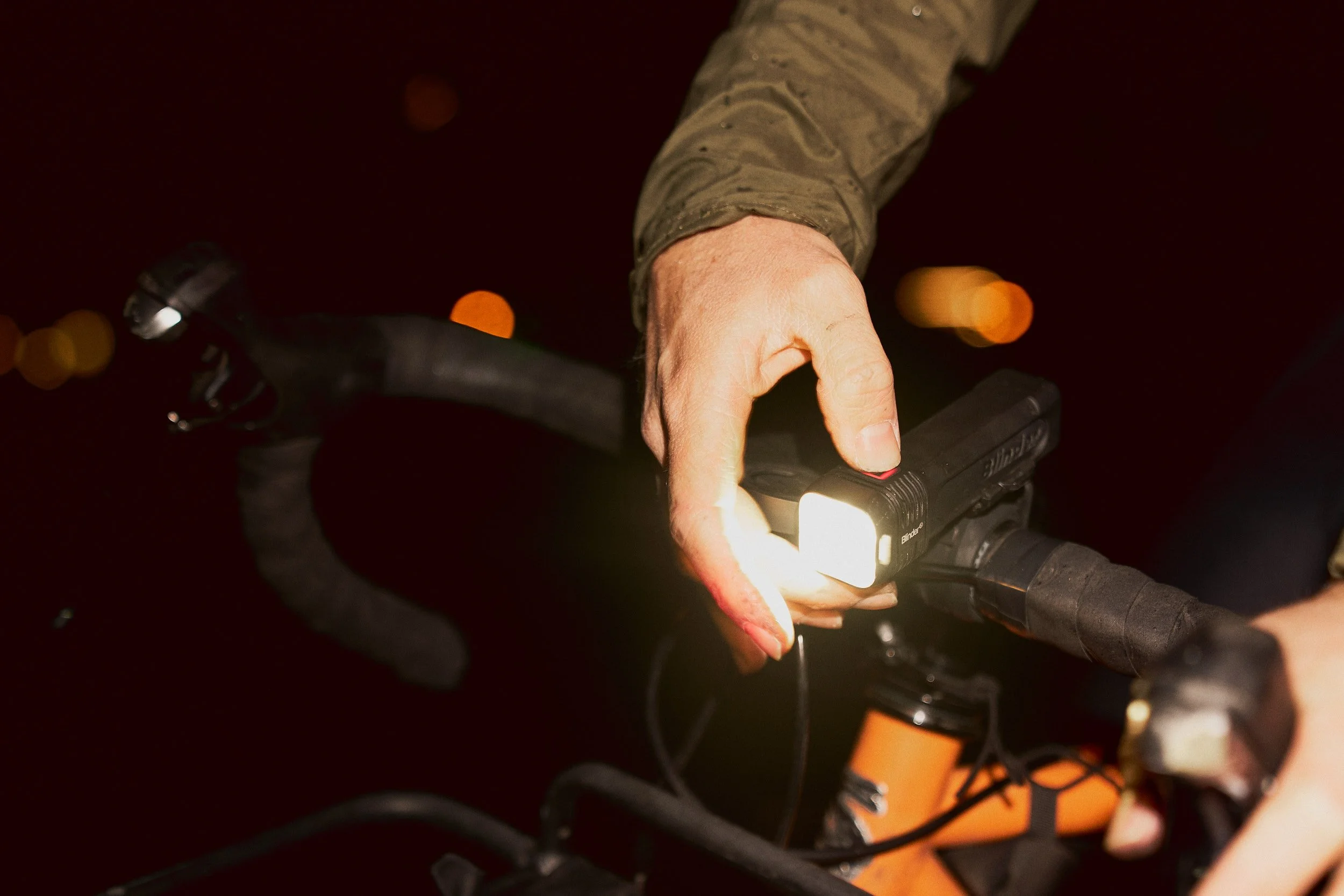
It ships with two mounting options: a versatile rubber strap that handles a wide range of bar diameters, and a GoPro-style mount allowing the light to tuck underneath a bike computer, freeing up valuable real estate on the bars and providing a clear beam position that is designed for riding on the road.
Once clicked in, the connection on both mounts is rock-solid with no noticeable rattle. Charging is handled via a USB-C port on the underside. Crucially for ultra-endurance riding, the port is positioned so you can charge the light via a power bank while it’s still mounted and in use.
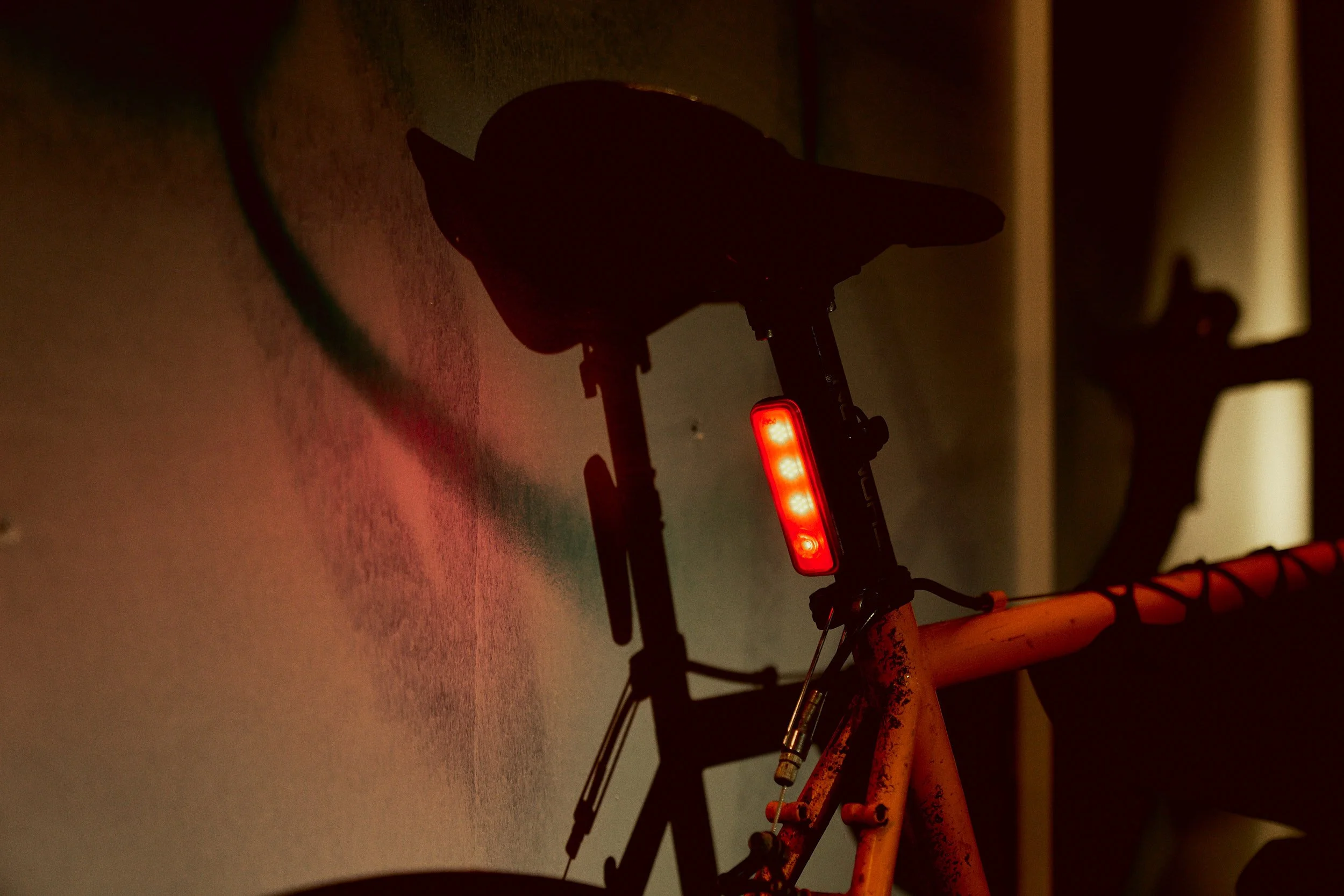
The R-150 rear light is much lighter—expected given the lower lumen count—but it retains that premium feel with a grippy, rubberised texture. A small clasp paired with a silicone band makes for minimal but effective mounting. While it feels plenty secure enough on a standard seatpost, it’s less versatile than the front unit. Knog includes several band sizes, but, I’d be hesitant to trust this mount on thinner seat stays or clipped onto a shifting bikepacking bag for an entire trip.
Charging on the rear light is via an exposed integrated USB connector and the lack of cables is something to appreciate. Cleverly, the USB connector wraps partly around the seat post for a sleek minimal design although its this shape which makes it difficult to mount to anything other.
Put to the Test
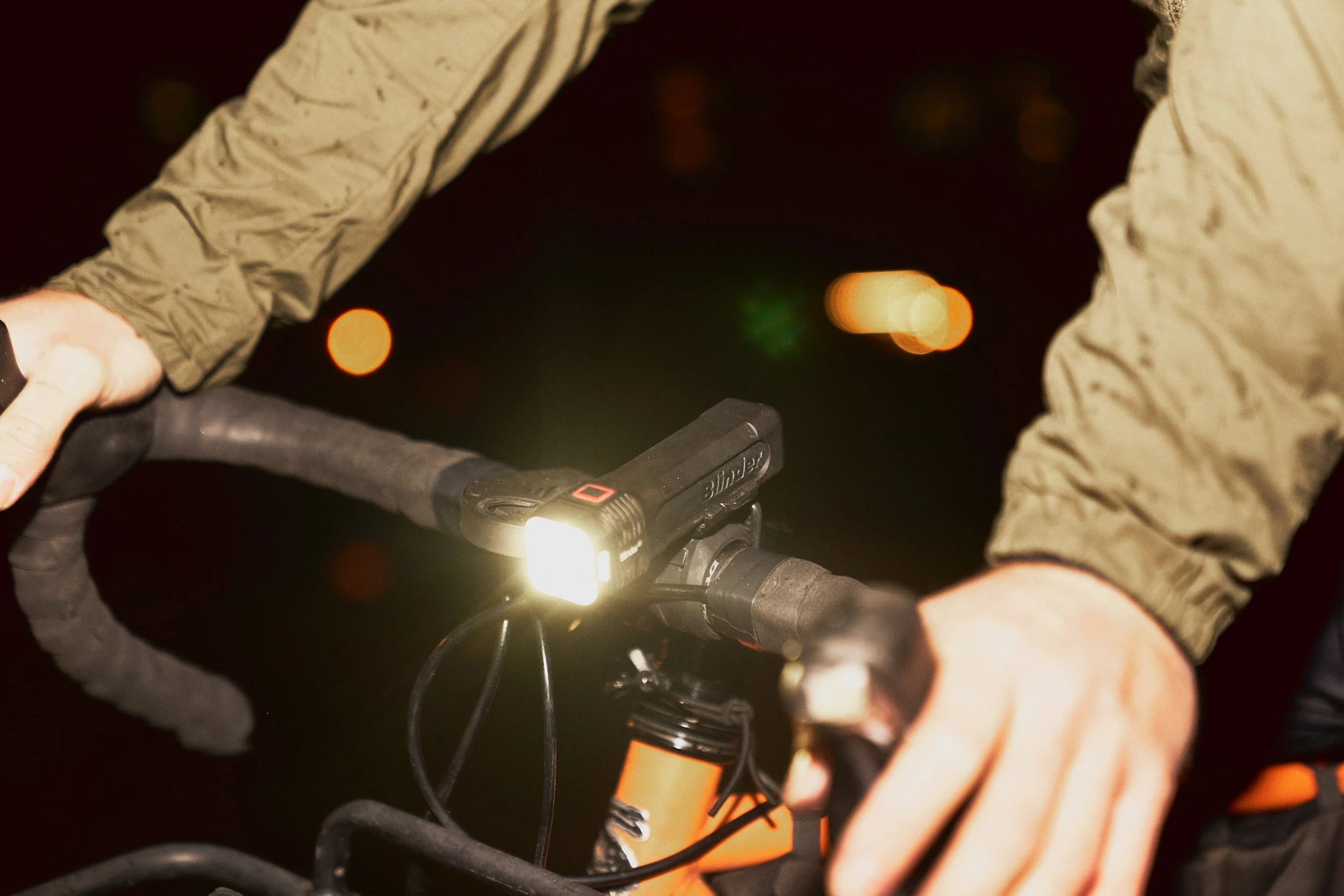
Since these arrived in the spring, they’ve clocked up countless hours on the bike whether crossing the continent on bike roads or just cruising around the city, and particularly now with such short daylight hours they’re swapped across bikes on a daily basis.
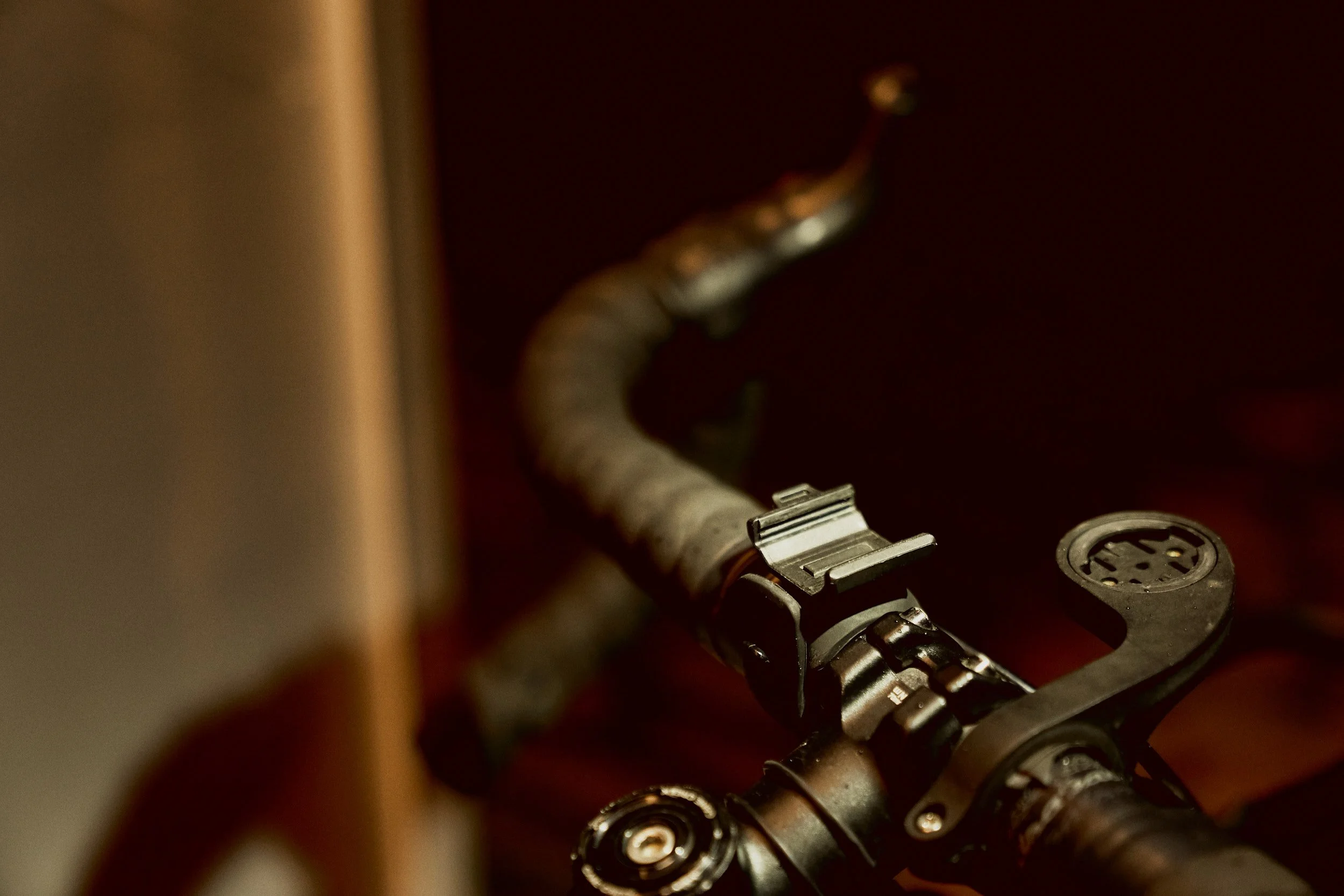
What’s really noticeable is versatile mounting. Whether I’m riding with or without bags, moving the light’s position around the bike or onto a different mount for a different setup is really easy and fast. The light is independent from the mount and can slide up or down it to dial in the optimum position. It’s a small detail, but when you’re fighting for millimetres of clearance between gear cables and a dry bag, that adjustability is a win.
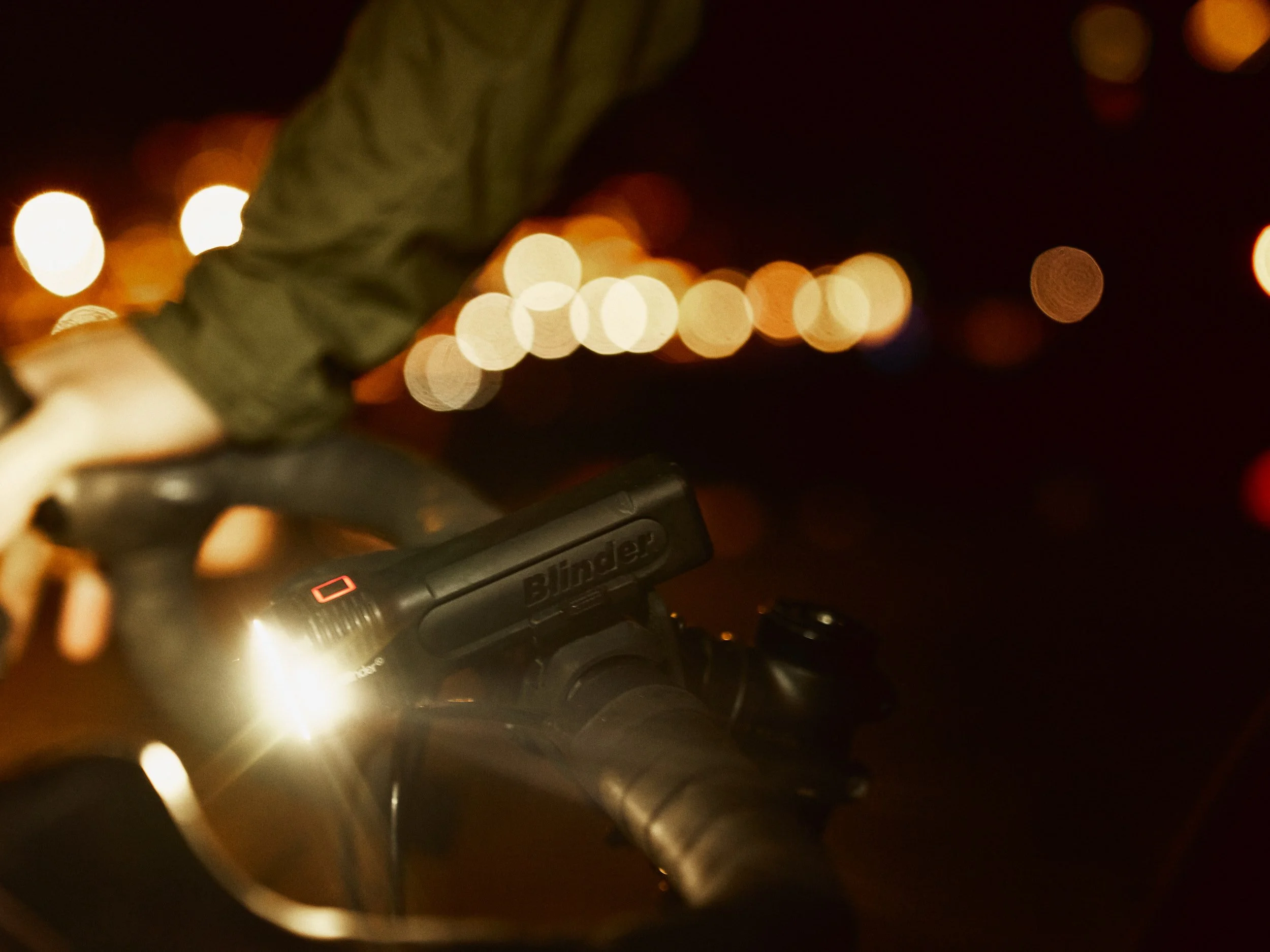
The road-optimised beam of the Blinder 1300 is great, combining three wide beams with three narrow beams. The result is extensive coverage down the road ahead, and the lateral windows on the side of the unit provide some useful peripheral light and essential side-on visibility for some added confidence riding on particularly dark roads.
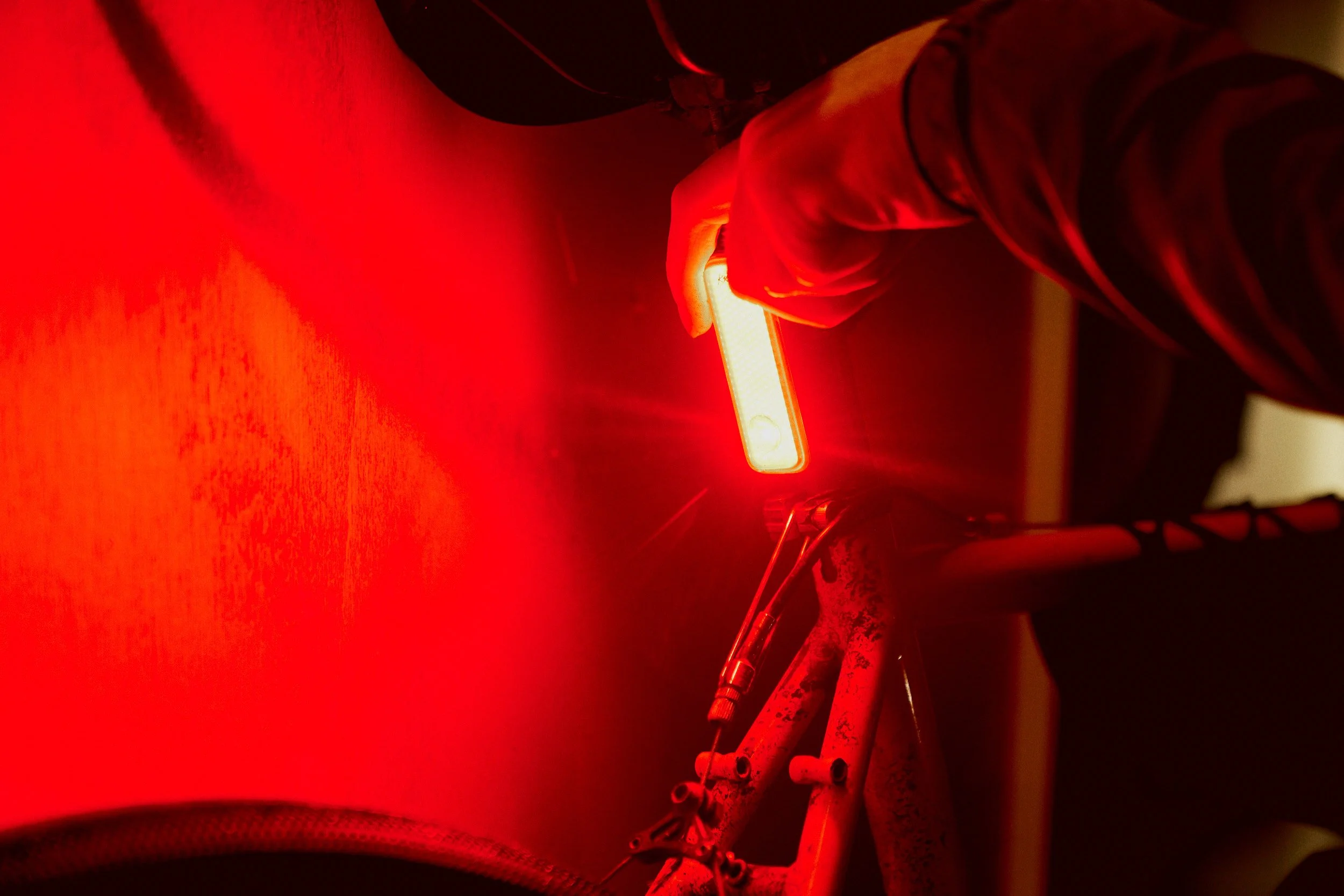
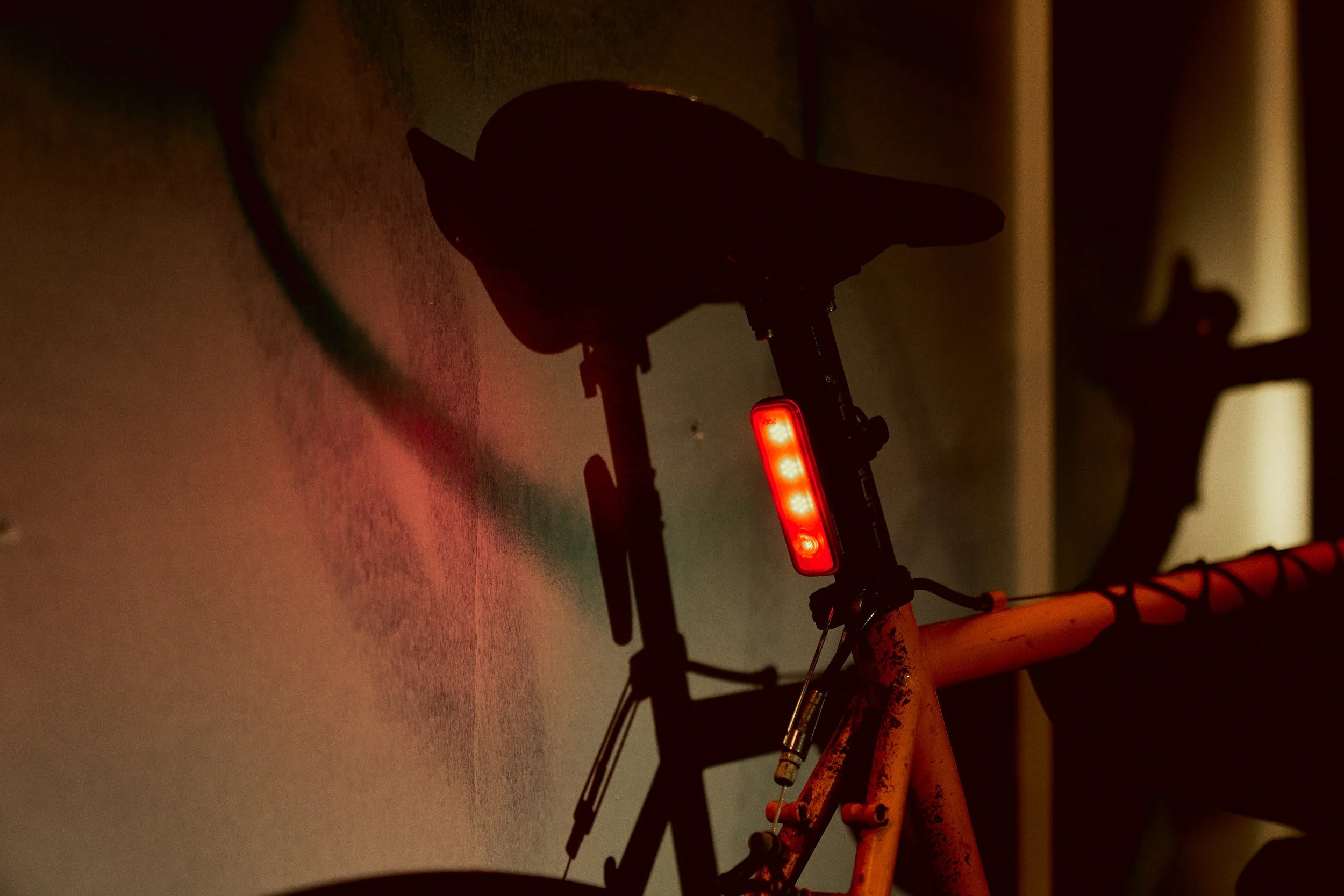
For the R-150 rear light, there are nine impressive light modes. Despite the high projection and strength, there’s a softer, glowing quality to the LED flash patterns. And with a dedicated strobe at the bottom it provides maximum visibility.
In ultra-endurance racing, battery preservation is everything and so on the TCR, the Knog took assumed the role of a high-performing backup. While the Blinder is a joy to use, its 1.5-hour runtime on its max 1300 lumens or 3 hours at 650 lumens couldn't compete with the alternative, the Lezyne 1400+, which offers 12.5 hours at 450 lumens. When you’re facing a long, unlit mountain descent at 2:00 AM, the knowledge that you’ll make it down with some light is invaluable, particularly when you’ll probably have to do the same again tomorrow and the day after, perhaps without finding a power source in between.
Similarly, the R-150 performed well in its flashing modes, but the battery drains quickly on solid, high-output settings. When riding in a pair for long nights, flashing rear lights can be delirium-inducing for the person behind you, so I often reached for alternatives with longer solid runtimes to stay social and sane.
It’s definitely worth noting that Knog doesn't market these as ultra-racing or bikepacking lights, and to their credit, the advertised battery life accurately reflects their real time outputs. Back at home with more reliable charging available, I find myself using them far more again taking full advantage of the more powerful settings available but I’m still reminded quite regularly by its flashing red LEDs that they do require frequent charging.

Key Features
Battery life
Only lasting for 90 minutes on full beam, where these lights are let down the most is its battery life. While it probably suffices for most riders, for bikepackers or long distance riders, riding through the night, these won’t last anywhere near long enough on their own.
Mounting options
The Blinder 1300 front unit comes with two seperate mounts. A tough and flexible rubber handlebar mount and a Go-Pro compatible mount that can position the light below your computer to keep it neatly out of the way.
Power output
An innovative combination of powerful LEDs specifically designed for the road combines three wide beam optics with three narrow beam optics to provide powerful illumination for up to 120 m.
Light Modes
With six different lighting modes on the Blinder 1300 and nine for the R-150 there is plenty of options for any scenario.
Specs
Front
1300 lumens
Run time: 1.5 - 120 hours
6 light modes
USB-C rechargable
100% waterproof
Handle bar and computer mounts
Rear
150 lumens
Run time: 3.5 - 50 hours
9 light modes
Integrated USB-A connector
100% waterproof
Seat post compatible
Price as pair: £149.99
Rating
4/5
Pros
Sleek design
Durable build and materials
Powerful output
Lots of light modes and patterns to chose from
Intuitive mounting options
Cons
Shorter run-time than some competitors
Is the Knog Blinder Set worth your money?
Knog doesn’t claim these lights are designed for ultra-long, self-supported rides, and in that context the battery life simply can’t compete with some of the bigger units on the market with much bigger batteries. If you’re looking for a single-charge solution to get you through an entire night of riding, there are better—and often cheaper—alternatives available.
However, for shorter training loops, commuting, or weekend tours where lights are only needed part of the time and you have reliable access to charging each night, the Knog Blinder 1300 and R-150 combo is a great option. These are impressively high-quality lights at a reasonable price, backed up by excellent build quality, versatile mounting options, solid beam patterns, and well-considered light modes. They’ve earned a place in my regular rotation for shorter rides and will also serve as dependable backups for bigger missions—so long as I remember to keep them charged.